
Call Center
+254725058419
Mail us for help
info@new-ways.org.so
Location
Mogadishu, Somalia
A Night in the Bush: Farhiya’s Miraculous Reunion with Her Mother After Going Missing
Ahmed Abdi, New Ways Communications Officer
November 19, 2024
On October 29, around 3 pm, nine-year-old mentally disabled Farhiya went out with a bunch of neighborhood girls to collect firewood from a nearby hill for her family in Wakaalada IDP Camp in Marko in Lower Shebele in the extreme afternoon heat. In Somalia, girls take on the difficult task of some of the heaviest and most dangerous household chores. Farhiya being mentally disabled put a burden on her ability to meet some family expectations. Despite her medical condition, Farhiya makes no exceptions when it comes to taking care of her family. Forty-five minutes into their expedition to the bush, the girls were shocked to hear successive gunshots in close range. In a moment, the girls’ fun hike turned into a frightening moment. The gunshots were so close that the girls felt unsafe. Unable to fully grasp what was unfolding around them, the girls had no choice but to run into the bush for safety.
While other girls ran together to the bush, Farhiya took a different direction as fast as she could all by herself. At home, Farhiya’s mother, Fadumo, realizing the danger nearby, started to worry about her daughter’s well-being. The gunshots were ringing out near where the girls were walking. The entire community entered a moment of fear. As worry and uncertainty about Farhiya’s safety and whereabouts continued to pain Fadumo, she began to trace her daughter’s footsteps in hope of finding her amid the looming danger ahead of her.
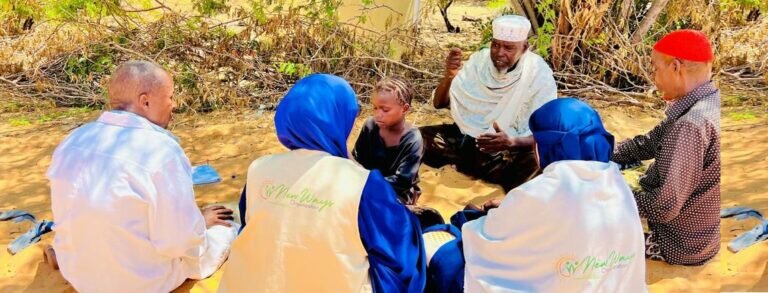
Farhiya with the search crew after she was found
At that moment, it turned out that two competing clans were fiercely fighting near the IDP camp where Farhiya and other girls lived. In Somalia, clan clashes are quite frequent due to competition over the scarce resources. The two clans have been feuding over the control of land for many years. As Fadumo continued to trace every footprint of her missing daughter, any hopes of her sight seemed to fade. Fadumo started crying while on a search mission to find her little daughter. Farhiya’s mental disability had increased her vulnerability and risk of being sexually harassed while on the run, which added extra worry, but Fadumo had no choice but to track down her daughter while fighting was still raging. At the camp, Fadumo received the news that the other girls had arrived at the camp safely but not her daughter, which made Fadumo worry again.
After an intense search in the bush and hill, Fadumo headed back to the camp with pain and grief. Upon arrival, Fadumo appealed to the camp community to find her missing daughter. As the news of a missing child swept through the camp residents, efforts to find Farhiya quickly followed.It was at that time that a New Ways Organization child protection focal person at the camp informed the NWO Protection Team in Mogadishu about Farhiya’s disappearance. The Protection Team swiftly informed the camp committee about the news of Farhiya and urged them to mobilize an immediate search crew. The news of Farhiya’s disappearance was announced in the mosque during evening prayer time. At times of crises, community mobilization is the best and fastest way of dealing with any situation in the IDP refugee camps.
As Fadumo anxiously awaited for the arrival of her missing daughter, the search mission to find little Farhiya got underway. In an intense afternoon search in the bush, hill and potentially anywhere a child would sneak in, efforts to find Farhiya were dimming. The search crew was later joined by the entire camp community. And while they left nowhere unchecked, finding Farhiya became literally impossible, a pain for the community and ofcourse crying Fadumo. In the midst of confusion and uncertainty about Farhiya’s whereabouts and wellbeing, the big news came in. And you probably guessed it correctly, it’s the good news that everyone has anxiously been waiting for. “Farhiya has been found safe and alive” but the good news has not reached the community and Fadumo yet. But first Halimo, the search hero.
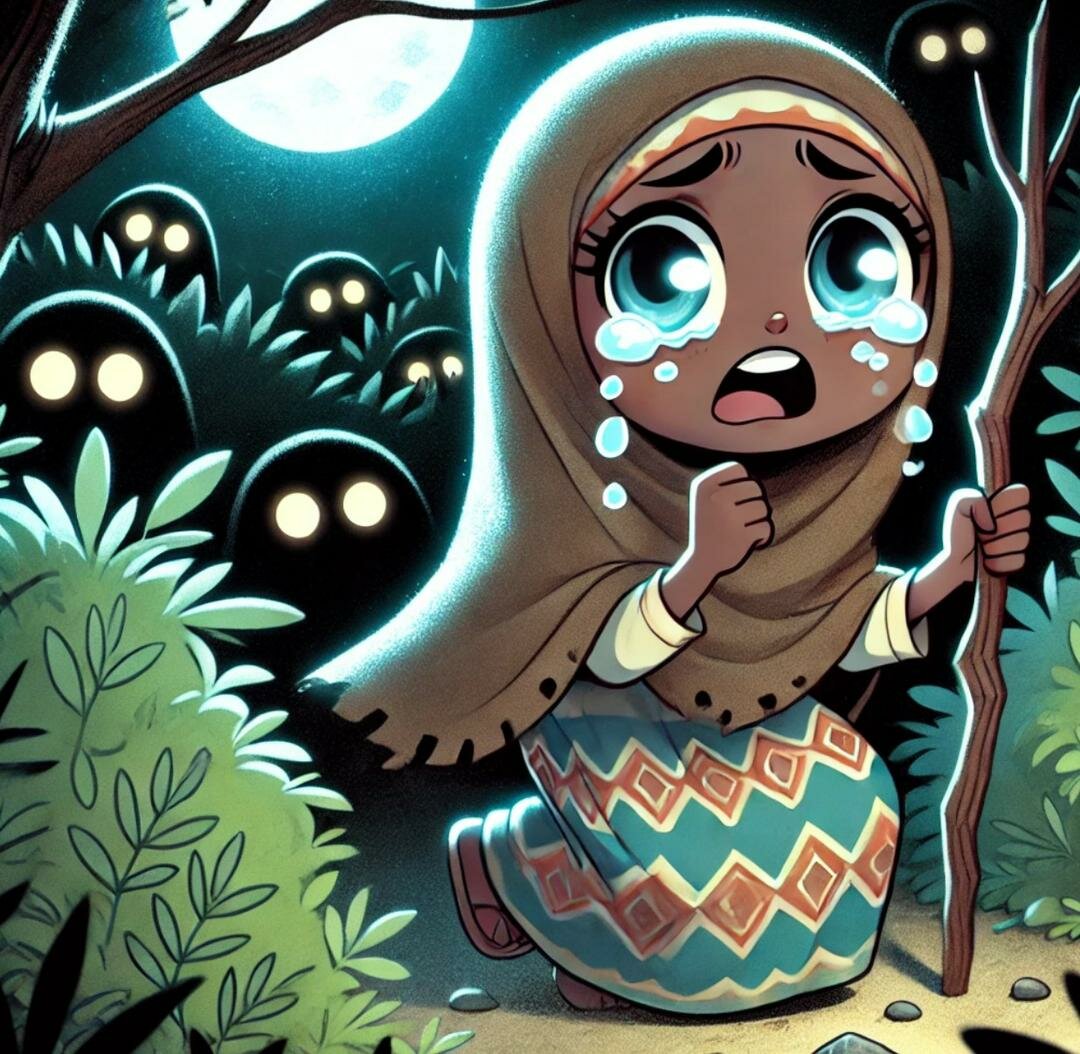
With the permission of her family, we generated an image of Farhiya in the bush screaming for help based on the story
Halimo, a mother, who lives in an IDP camp near Farhiya’s camp, heard the news that a child had gone missing in the evening of Farhiya’s disappearance. She immediately volunteered to look for the missing child in the bushes near her camp. Fortunately, Halimo, out of the blue, heard a distant voice. She continued to move towards the direction echo was coming from until she spotted what seemed to be a child in a dense forest area near the camp. She couldn’t believe it was a human at first sight but Halimo continued to approach as slowly as she could with all the fears in her mind that it would be something dangerous. The more she approached little Farhiya, the higher her confidence grew. In a few meters range, Halimo saw a child walking around the bush terrified and crying. At around 9pm, It could not be clearer for Halimo that she had finally found Farhiya. Halimo grabbed, hugged and consoled the terrified kid.Farhiya had bruises and blood in her face, and tore down her cloth while running around a thorny bush. A little while later, Halimo started questioning the child but she was emotionally too terrified to tell anything. The more Halimo probed for questions, the little she would know. Halimo decided to take Farhiya to her camp and spent the whole night at her house.
On the other side of the camp, heartbroken, Fadumo was holding onto her last hope. The search crew was out in the bush checking everywhere they could think about. Hours of searching in the bush ended without a hope. Empty-handed but optimistic, the rescue team returned to camp later that evening. Early in the morning, the next day, efforts to find Fariya resumed. The search mission, this time headed to a refugee camp near where Farhiya was believed to have gone missing in a desperate last minute plea to locate Farhiya’s whereabouts. As soon as they entered the camp, they asked if they had seen a child missing. And to their surprise, Halimo pulled out little Farhiya from her tent. A moment of relief and happiness for everyone! Halimo explained the process of finding Farhiya to the search crew and later handed out the child to them so they could take her to her mother. The team, happy and tired, took Farhiya to Fadumo’s house.When Fadumo saw the search crew making their way back to the camp with her daughter, Farhiya, she passed out from excitement. She was in complete disbelief until she ran into her and hugged her. Anxious and excited, Fadumo expressed her gratitude to everyone who was involved in her daughter’s search. “My prayers have been accepted”, said joyous Fadumo.
The Wakaalada IDP community called Halimo’s heroism in finding little Farhiya overnight “truly remarkable.” As soon as Farhiya was brought home and reunited with her family, she was taken to a New Ways One Stop childcare center funded by UNICEF Somalia in Marko where she received medical care. Our counselors at the child center offered Farhiya trauma-focused cognitive and emotional counseling support days after her finding. Farhiya is now recovering from her trauma and is feeling happy. And while the search mission ended happily, Farhiya’s search tale is one of the few stories reported. As a storyteller who came across countless stories in my storytelling career, putting the story of mentally disabled girl like that of Farhiya, has moved me to tears. In Somalia, missing children is a common problem when tribal clashes erupt.
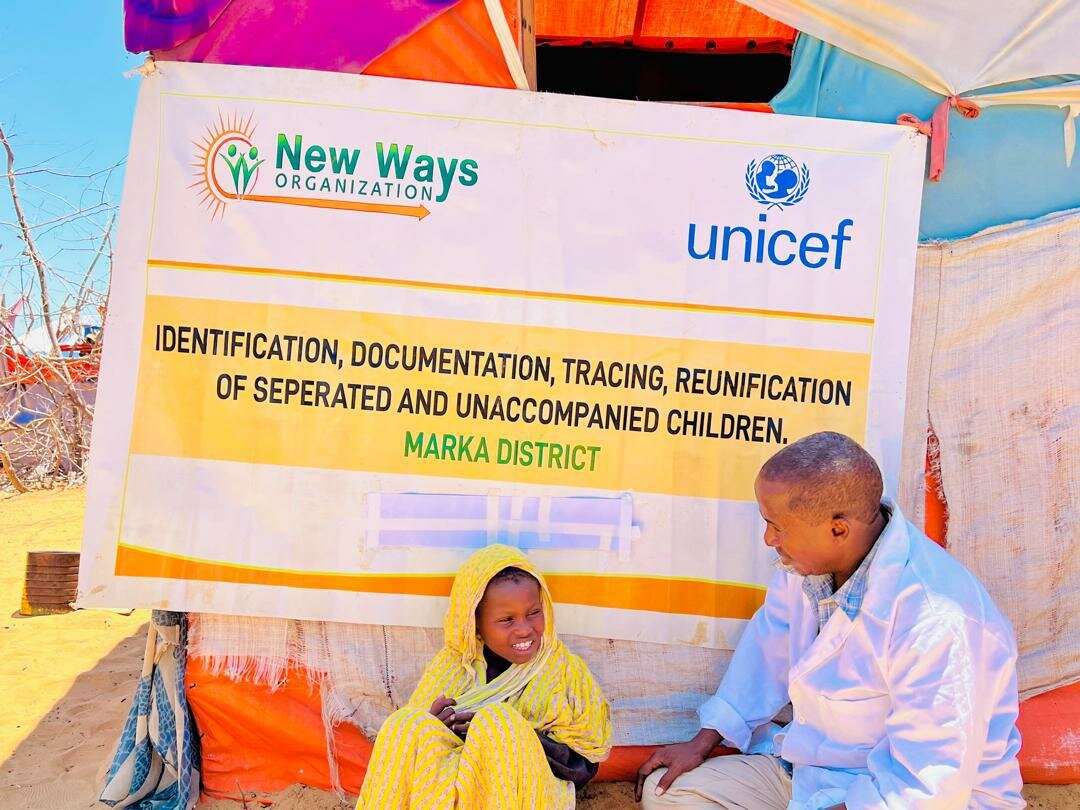
Farhiya receiving counseling support
The story of Farhiya is a true testimony to the power of community coexistence. “What is truly so remarkable about this is the sense of community whenever something happens.” said a local elder after Farhiya was found. And while missing children in Somalia is statistically rare, children face a growing threat of food insecurity, malnutrition, child labour and gender abuse in their early child development stages. New Ways, with the generous support of UNICEF Somalia continues to support children. Our Protection Team works closely with families and law enforcement to ensure that the safety and wellbeing of children are protected in our areas of our operations.
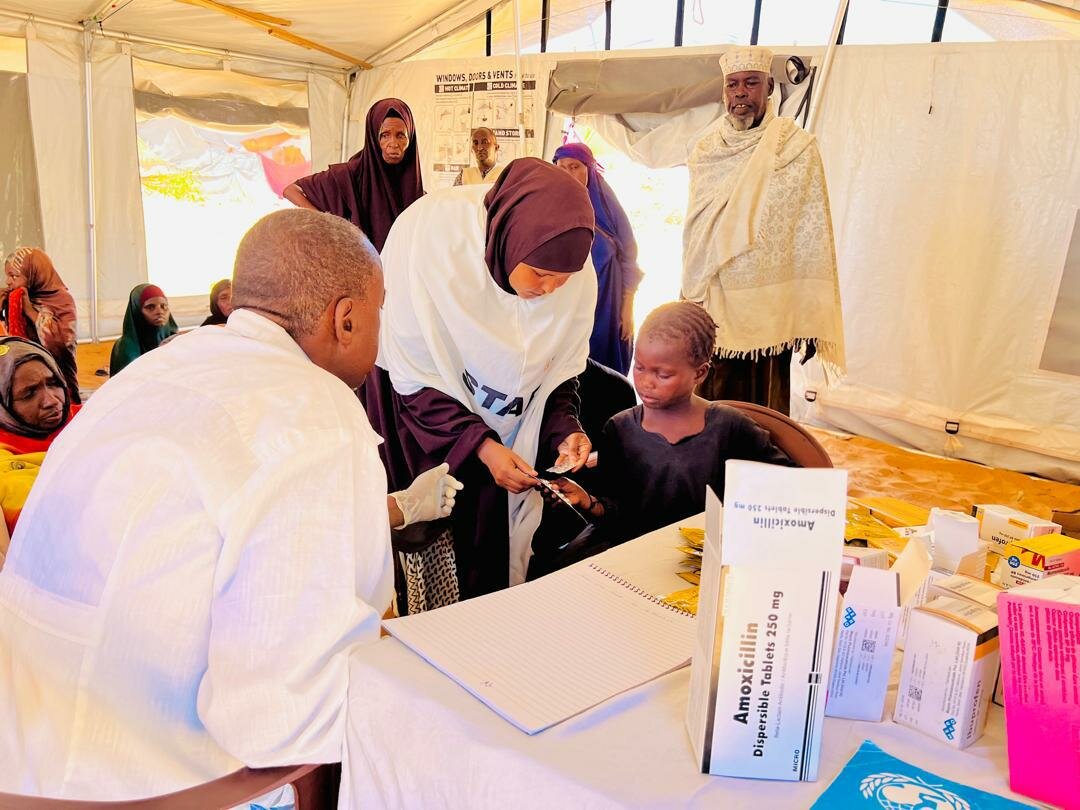
Farhiya getting medical care at One Stop, a UNICEF-funded emergency medical center